Licensed retaining wall company in Greensboro, NC. Block, natural stone, and boulder walls — every one engineered with drainage built in behind it for Piedmont clay soil. Installed by our own in-house crew. No subcontractors. Since 2012.
A retaining wall holds back soil on a slope so the ground above it can't slide, erode, or wash out. On a sloped Greensboro lot, that's the difference between an unusable hillside and a flat, functional backyard. But a wall is only doing its job if it can resist the force of the soil — and saturated soil pushes hard.
That force has a name: hydrostatic pressure. When water collects in the soil behind a wall and can't escape, it presses outward until a poorly built wall bulges, leans, cracks, or collapses. In Guilford County's red clay — which holds water instead of draining it — this is the number one reason retaining walls fail. It's also the number one thing cheap installers skip.
Green & Clean builds every wall to defeat that pressure: proper excavation, a compacted gravel base, clean gravel backfill, a perforated footing drain, and geogrid reinforcement where the height calls for it. Drainage isn't an add-on line item on our quotes — it's standard on every single wall, because a wall without it is just a wall waiting to fail.
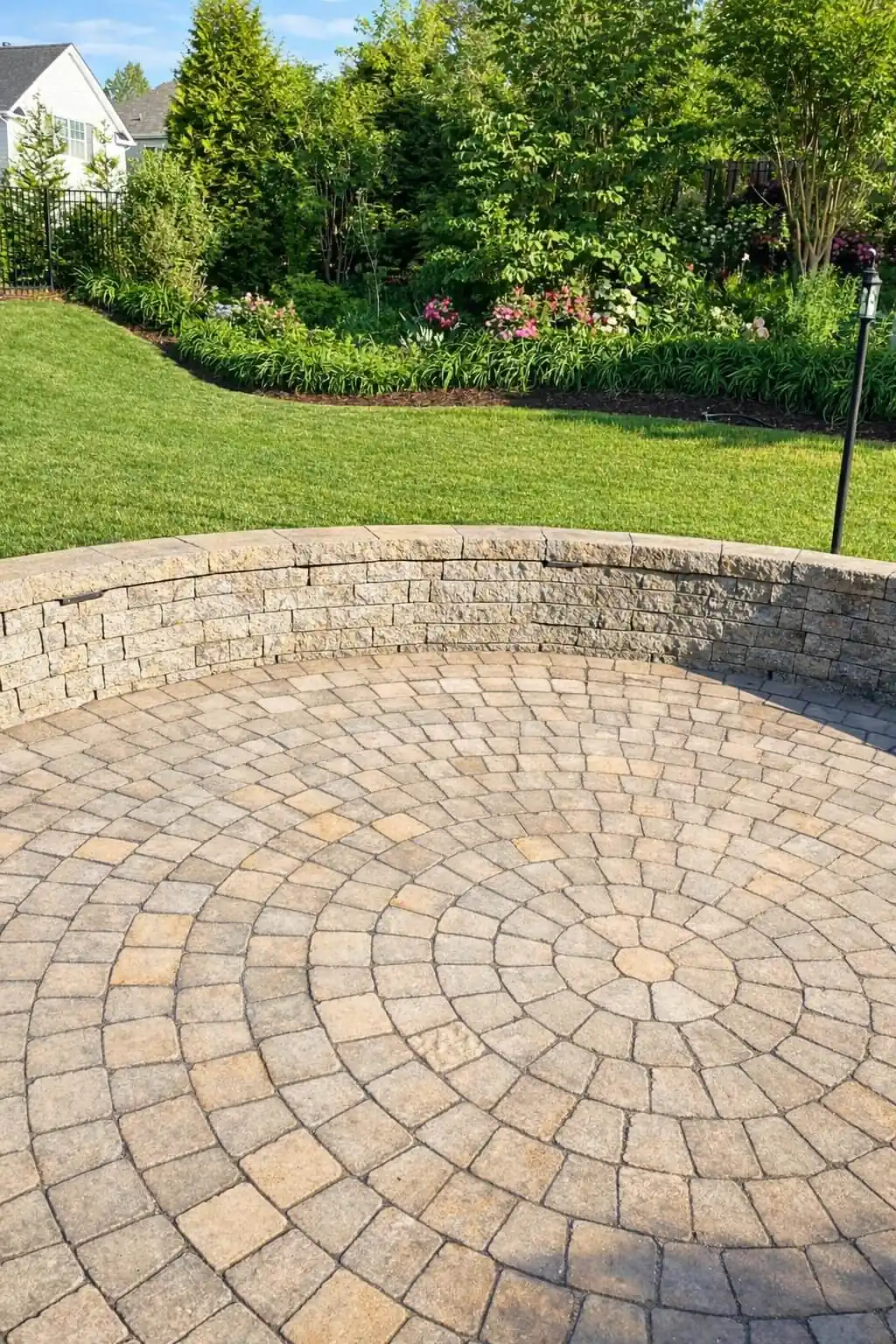
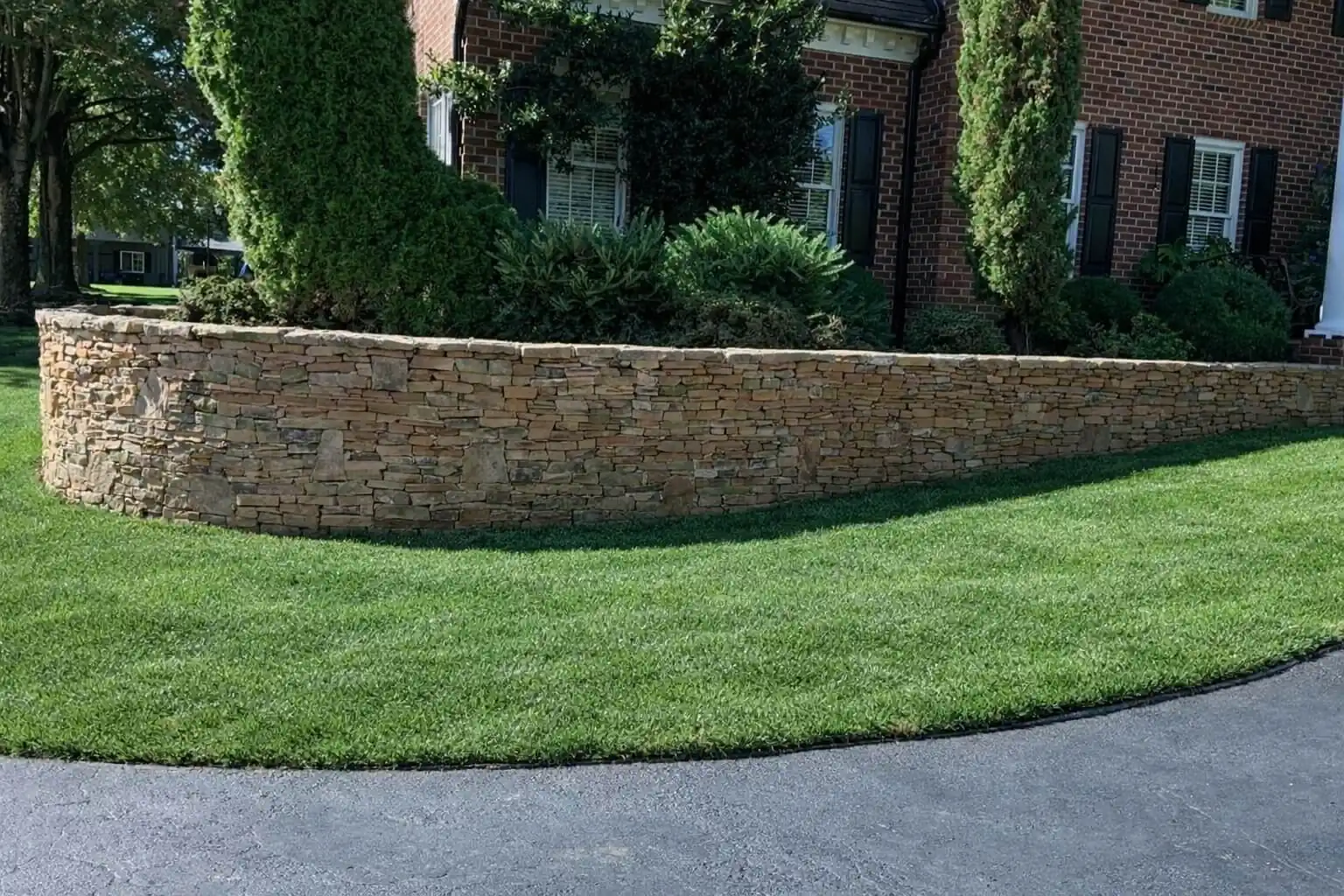
Three core wall materials, plus garden and tiered systems — every one built with proper base preparation and drainage integrated as standard.
The most popular structural choice in Greensboro. Modular engineered blocks (Versa-Lok, Belgard and similar systems) interlock and can be reinforced with geogrid to safely retain real grade changes — clean, consistent, and built to spec.
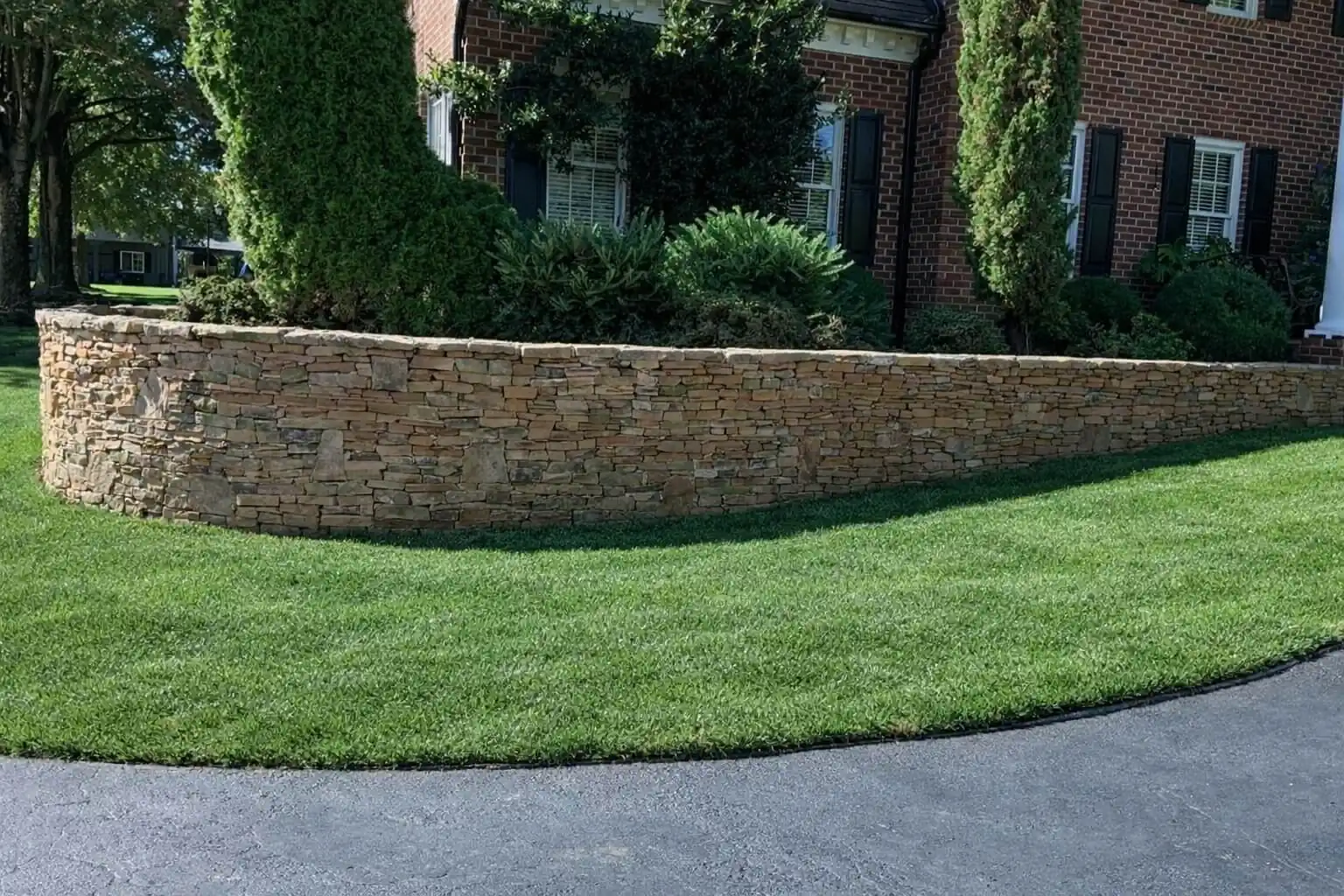
Get A Free Wall Quote →The most premium, timeless look. Hand-set fieldstone and dry-stack walls that suit garden beds, sitting walls, and front-yard grade changes where appearance matters as much as function — backed by the same drainage and base work as every structural wall.
Get A Free Wall Quote →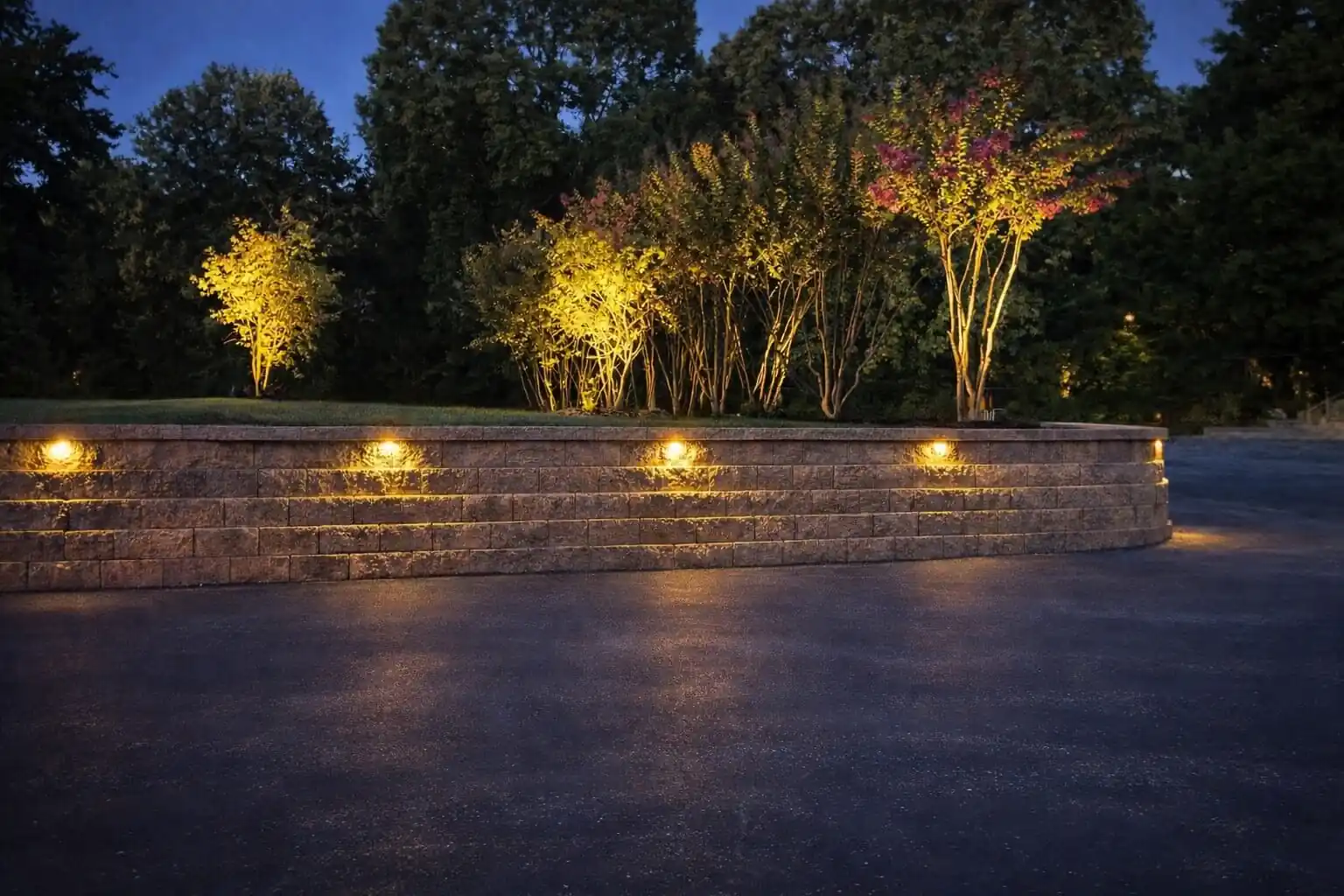
Large natural boulders set to retain a slope with a rugged, organic look — ideal for naturalistic landscapes, larger grade changes, and erosion-prone hillsides. Often paired with landscape lighting and planting to finish the slope.
Get A Free Wall Quote →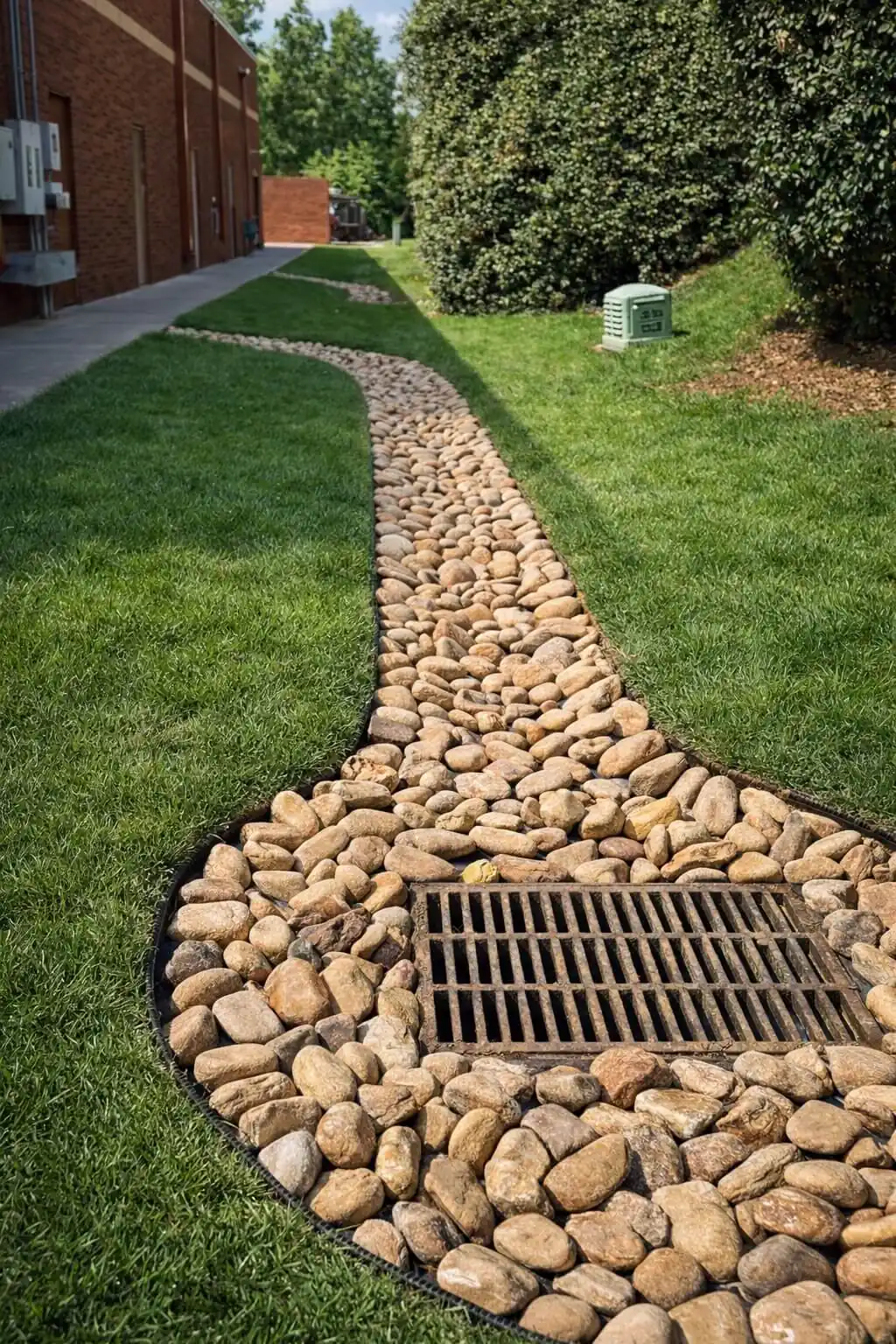
A free-draining zone directly behind the wall so water moves down, not into the soil.
A pipe at the base of the wall that collects water and carries it away.
Exits that release water well away from the wall and foundation.
Keeps soil from clogging the gravel and drain over time.
Directing runoff so it never sheets straight into the back of the wall.
Most failed retaining walls in the Piedmont don't fail because of bad block or weak stone. They fail because water built up behind them. Soil holds water; saturated soil gets heavy and exerts hydrostatic pressure on the back of the wall. With nowhere to go, that pressure keeps pushing until the wall leans, bulges, or comes apart.
A wall built right gives the water a way out. That's why drainage isn't a line item on our quotes — it's engineered into the structure of every wall we build, layer by layer, from the gravel backfill out to the graded surface above.
The five layers shown here work together: each one gives water one more reason to leave instead of pushing on your wall. Skip any of them to save money up front, and you're buying a wall that's already on a countdown to failure.
We also build standalone drainage — French drains, dry creek beds, and yard grading — so if water is already pooling or washing out your slope, we solve the whole problem, not just the wall.
Fix My Slope & DrainageA French drain is a simple, proven system: a perforated pipe set in clean gravel and wrapped in filter fabric, sloped to carry water away from where it collects. Behind a retaining wall, in a soggy yard, or along a foundation, it gives groundwater a path of least resistance — out and away — before it can build pressure or pool on the surface.
Saturated clay behind a wall gets heavy and pushes hard. A French drain collects that water at the base and carries it off, so hydrostatic pressure never gets the chance to lean, bulge, or crack the structure.
Standing water, mushy lawn, and that one corner that never drains are usually a grading and groundwater problem. A properly sloped French drain intercepts the water underground and moves it to a safe outlet or dry well.
Water that sheets toward a house or washes down a slope causes erosion and foundation issues over time. Routing it through a French drain — often paired with a dry creek bed — stops the washout and keeps soil where it belongs.
We build French drains as part of a wall, or on their own to solve drainage you already have. Either way, it's the same licensed in-house crew — and we daylight every pipe so water actually leaves your property.
Get A Free Drainage AssessmentA retaining wall solves several problems at once. On a sloped Greensboro lot, it's often the single highest-impact improvement you can make.
Turn a steep, unusable hillside into flat, level ground you can actually use — for a patio, lawn, play area, or garden.
Hold a slope in place so heavy NC rain stops washing soil, mulch, and grade downhill toward your house or driveway.
Manage grade and water away from the home, keeping soil and runoff from collecting against the foundation.
Build tiered planting beds and garden terraces that make a slope productive and beautiful instead of bare and washing out.
Headwalls and grade walls along driveways stop washout at the edges and create clean, defined transitions.
Sitting walls around patios and fire pits add built-in seating and define outdoor living space — function plus form.
A well-built wall converts wasted slope into usable square footage and adds lasting structure that buyers notice.
Where two grades meet awkwardly, a wall creates a clean, intentional break instead of an eroding, hard-to-mow slope.
There are specific reasons homeowners across Guilford County choose Green & Clean to build a wall that actually lasts.
Gravel backfill, footing drain, and outlets are standard on every wall we build — not an upsell. It's the single biggest reason walls last in clay soil.
NC Landscape Contractor License CL.1951 — your assurance the wall is built to North Carolina standards. Many local installers don't carry this license.
Walls over 4 feet or tiered systems need geogrid reinforcement and often engineering. We coordinate it and handle permitting so you don't have to.
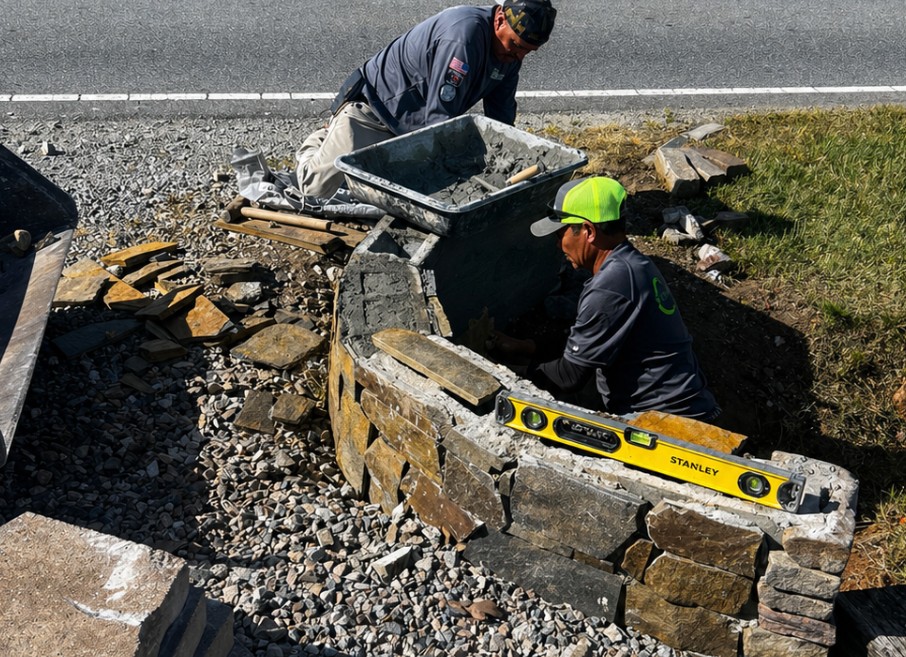
Every wall is built by our own licensed, insured crew. One company, one contract, one point of accountability for the life of the wall.
Over a decade of walls in Guilford County clay. We know how this soil holds water and builds pressure — out-of-state operators don't.
State of North Carolina certified Historically Underutilized Business. If your HOA or institution tracks diversity spend, we qualify without compromising quality.
A retaining wall lives or dies on what you can't see — the base and the drainage. Here's the process, start to finish.
A senior team member walks the slope, checks soil and water conditions, and measures the grade change the wall has to hold.
We dig the footing trench below the wall, then build and compact a level gravel base — the foundation that keeps the wall from settling or shifting.
Course by course, block or stone is set, leveled, and (where height requires) tied back into the soil with geogrid for structural strength.
Clean gravel backfill, a perforated footing drain, filter fabric, and outlets — so water behind the wall always has a way out.
We backfill, cap the wall, grade the surface to shed runoff, and walk the finished project with you before we call it done.
Block, stone, and boulder retaining walls — Greensboro to Charlotte.
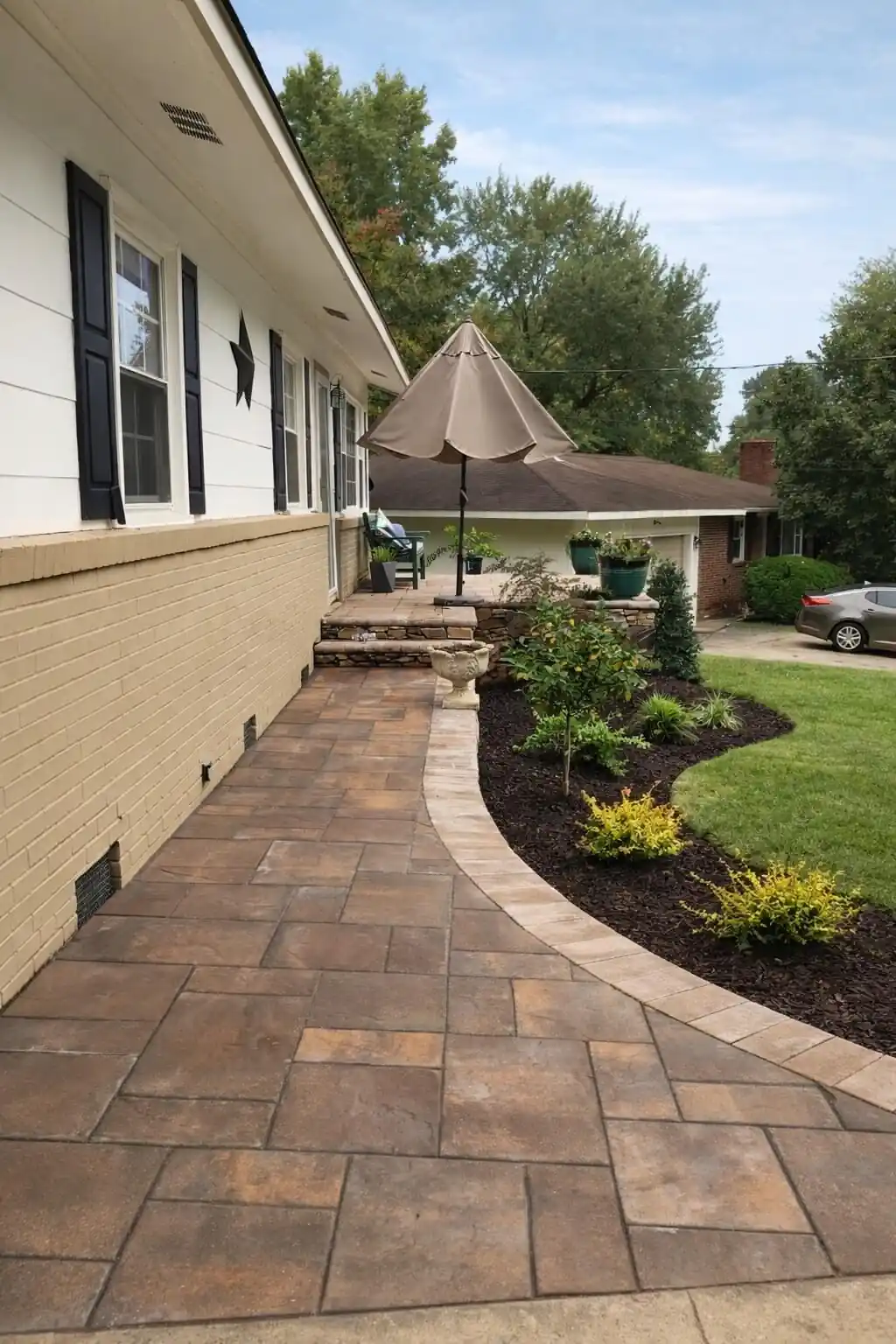
Real price ranges — not "call for pricing." Exact quotes follow a free on-site walkthrough where we assess slope, soil, and drainage.
Retaining wall cost generally runs about $40–$90 per face square foot installed, driven by height, material, drainage, and site access. All pricing follows a free on-site walkthrough — Guilford County clay soil and slope conditions significantly affect base preparation and final cost.
Trusted by homeowners and property managers across Greensboro, Colfax, Kernersville, and the Piedmont Triad.
"We absolutely would recommend Green and Clean Landscaping! They built our paving stone patio, outdoor kitchen with grill and granite island, fire pit and stone sitting wall. The entire team was professional, hard working and extremely talented. Alex was wonderful and always responded promptly."
"Communication is one of the most valuable assets a contractor can offer — and Kent and Alex are superb at this. The job was done to plan, on time and with great execution. First class materials and plants. Highly recommend their services."
"I recently worked with Alex on the installation of a paver patio for an outdoor employee break area. I found Alex highly responsive and easy to work with. The project completed early and exceeded expectations. We will not hesitate to utilize Alex and team again."
"What outstanding service!! Friendly, professional, and knowledgeable. We had 2 trees replaced with beautiful, quality trees. They worked until every aspect of the job met our satisfaction!! Highly recommended!"
"The team is very responsive, does great work and the customer service is exceptional. I would recommend them to anyone I know."
"Positive: Responsiveness, Quality, Professionalism, Value. Five stars across the board."

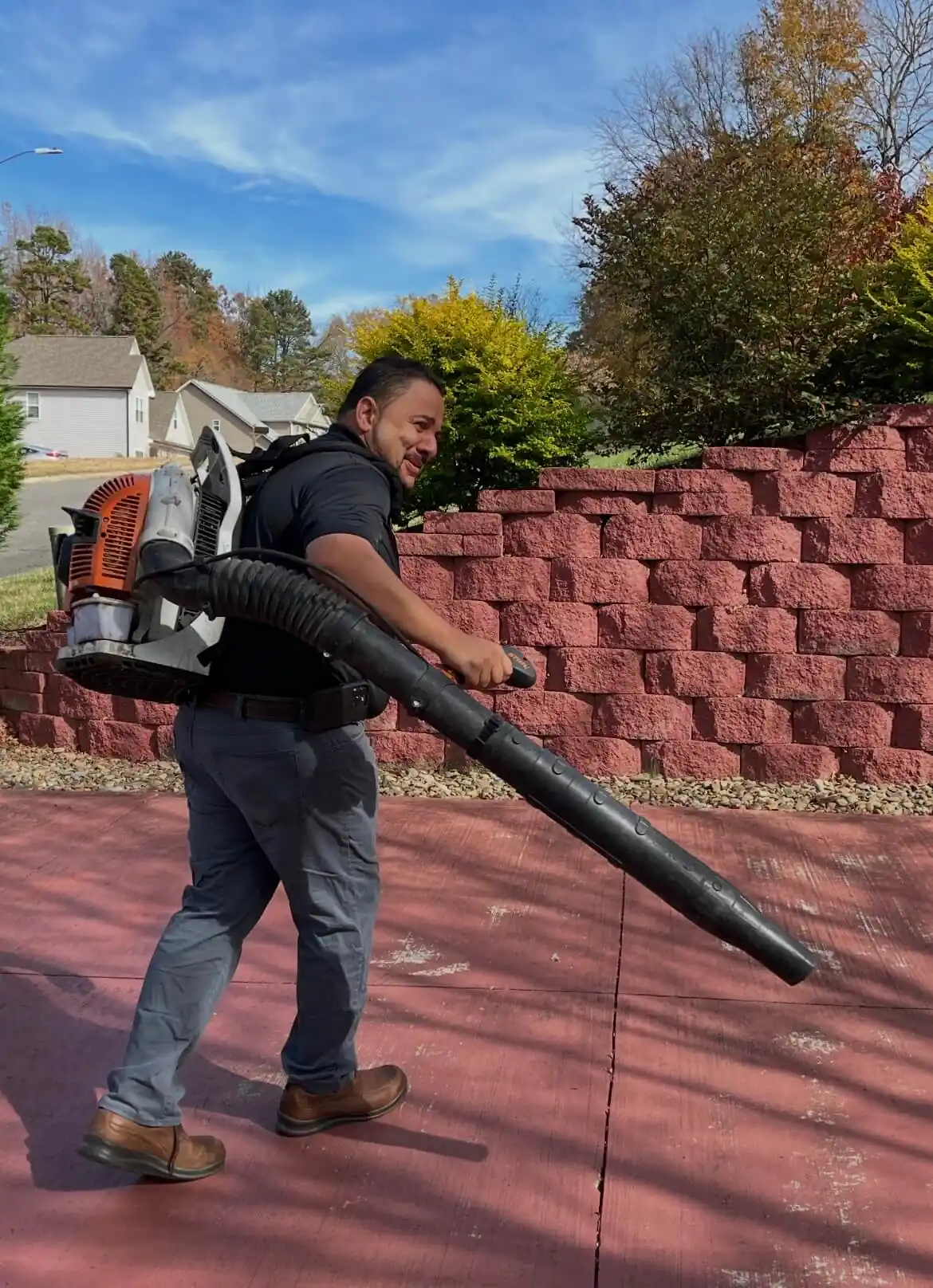
Alex Romo founded Green & Clean Landscaping Inc. in Greensboro in 2012 holding all three active North Carolina contractor licenses — Landscape Contractor CL.1951, Irrigation Contractor C-906, and Commercial Pesticide Applicator 34802 — and is HUB Certified by the State of North Carolina.
Alex Romo and our management team oversee every wall project, walk the slope personally, and stay reachable throughout. Over a decade building walls across Guilford, Forsyth, and Alamance counties has given Green & Clean deep knowledge of local clay soil, how it holds water and builds pressure, and the freeze-thaw cycles and NC compliance requirements that out-of-state operators simply don’t understand.
Building walls for residential and commercial properties across the Piedmont Triad and Charlotte region — Guilford, Forsyth, Alamance, Cabarrus, and Mecklenburg counties.
Call 1-888-611-9186 — Mon–Fri 7AM–6PM. We respond to all form submissions within one business day. No automated systems, no call centers. You reach Green & Clean directly.
Ready to discuss your retaining wall project? Reach out directly — we respond within one business day.
Monday – Friday: 7AM – 6PM
Saturday: By Appointment
Sunday: Closed
We respond to all inquiries within one business day.